
Taking a peek at the unfinished-products market outlook
I started this blog with the vision, prediction or more simply the hypothesis that thanks to their ability to growth by design, unfinished-products will be successful in the new normal of our nowadays lives. After 6 months since the start of the pandemic, a view at the current market outlook is suggesting the hypothesis is confirmed.
In June the Financial Times performed a research on the performances of the economic sectors and published the list of the companies (top 100) that were prospering the most the pandemic[1] . The research looked at listed companies and how their market capitalization increased year to date (June 17th). The ranking was based on the absolute market capitalization increase.
Not surprisingly the big digital companies and technology giants (Amazon, Microsoft, Apple) come on the top of the list with an added market capitalization of 200 – 400 billions of dollars. The last of the list (Teladoc Health) had an increase of more than 8 billions of dollars. Change of capitalization (market capitalization increase compared to the 1st Jan 2020 value) varied between 4.5% (Nestle’) and 420% (International Holdings).
Companies were classified by sectors (including in brackets the 3 largest company in the given sector):
- Communication Services (e.g. Alphabet, Facebook, Tencent)
- Consumer discretionary (e.g. Amazon, Alibaba, Home Depot)
- Consumer staples (e.g. Nestle‘, Kweichow Moutai, Unilever)
- Energy (Reliance Industries)
- Financials (S&P Global)
- Healthcare (e.g. Roche, AbbVie, Novo Nordisk)
- Industrial (ZTO Express, SF Holding, Contemporary Amperex Technology)
- Materials (Newmont, Barrik Gold, LG Chem)
- Real Estate (e.g. American Tower, Prologis, Crown Castle International)
Starting from those data, and understanding the top 100 companies list gives only a view on the sectors but not the entire insight, we compared “speed” of the capitalization (percentage change) and “size” of the capitalization (added market capitalization). This classify sectors in (figure “Sectors View for companies (top 100) for net market gain in 2020” below):
- Fast Growing (high degree of change, lower size as aggregated score of added market capitalization). Those are the sectors that despite the lower perceived market value, are demonstrating their ability to grow and adapt to the new normal.
- Followers (low degree of change, lower size as aggregated score of added market capitalization). Those are just doing OK in the new normal.
- Leaders (high degree of change, high size as aggregated score of added market capitalization). Those are the sectors that, building on top of their pre-pandemic success, are demonstrating their ability to continuing lead and grow in the new normal.
- Mature (low degree of change, high size as aggregated score of added market capitalization). Those are the sectors that despite their pre-pandemic success are not yet demonstrating their full ability to grow in the new normal.
Given the nature of the selected companies cohort (high performers), it does not come by surprise the Mature’s quadrant being empty. On the other end it would be interesting to observe in the upcoming months the evolution of the Technology and Communication Services sectors (the closest ones to the quadrant).
An other interesting observation is that if we run the same classification on the single companies, Amazon is the only one that would end up in the Mature quadrant.
Sector like Financials and Energy have only one company listed in the top 100. Statically this could decrease the accuracy of their quadrant classification. That said, it provides two initial observations:
- first of all, the sector is not of an high size in terms of market capitalization
- secondly, the companies that were able to make to be in the top 100 have anyway a low speed.
The Industrial sector has only 3 companies listed in the top 100 but it is outperforming all the other in terms of growth speed.

So then, what about unfinished-products? If unfinished-products were a sector on its own, with a change of 48%, it was one of the best “fast growing” performer.
If unfinished-products were a sector on its own, it was one of the best “fast growing” performer.
Analyzing the list of the companies published by the Financial Times we selected the following eleven companies embracing unfinished-products as part of their core business model or as part of their go-to-market strategy.
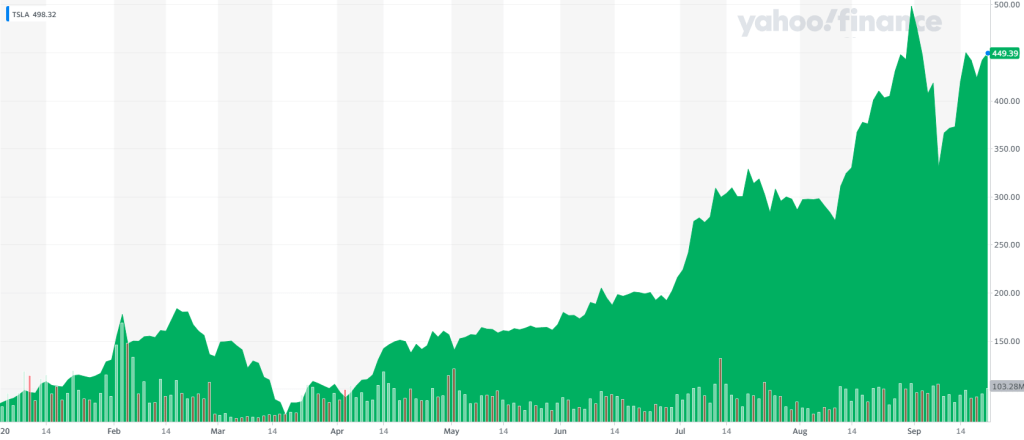
Tesla (#4)
Sector: Consumer discretionary / Market Capitalization added $ 108.4 bn (+144%)
Tesla represents the child poster of unfinished-products. Tesla established an ecosystem of consumers and third parties that revolutionized the driving experience. Tesla outpaces legacy competition in a market that will reach nearly 9 trillion of dollars by 2030 [2]. Tesla ability to innovate factories and delivering perfect software, is a model for the entire global industry and a north star for all the sector incumbent that straggle to work out their way.
Within its sector (consumer discretionary) is one of the best performer with a change of 144% (vs 37% as average) landing third only after Just Eat Takeaway (161%) and GSX Techedu (158%). An incredible performance that was able to weather the 8th September shares fall of 21%[3] and that as of September 2020 has been increasing 816% compared to this time last year.
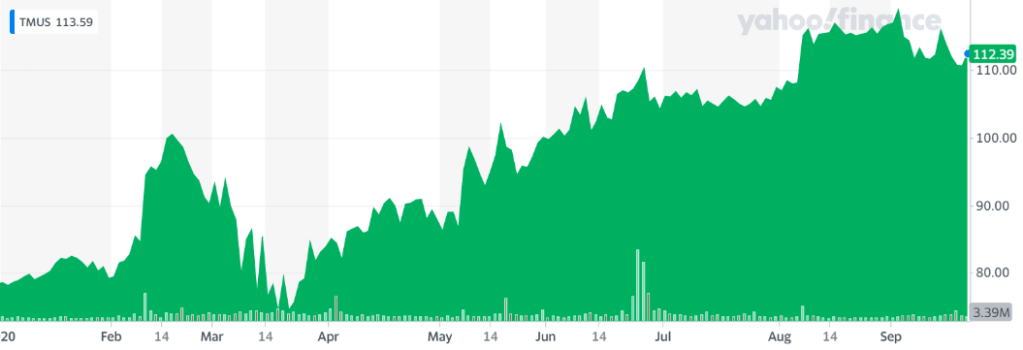
T-Mobile US (#10)
Sector: Communication Services / Market Capitalization added $ 59.7 bn (+89%)
Communication services provides the core capabilities for unfinished-products and T-Mobile offers in its go-to-market strategy solutions[4] for its customers to stay on top of things, and to help managing smart devices.
In the Communication Services T-Mobile is the only we selected for the unfinished-products. Its performances (change at 89%) are well ahead of the sector average (19%), second best performer after Sea Group (171%). Performances continue to be solid with a change of 39.33% in the last 52 weeks.
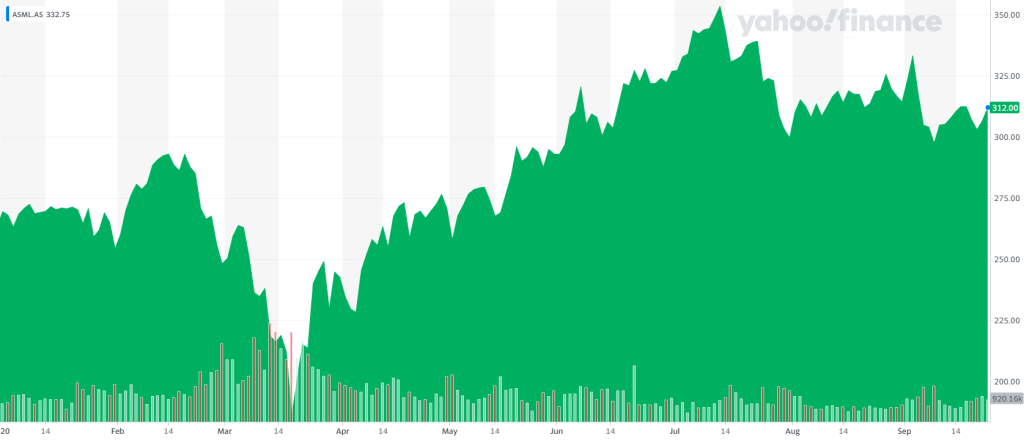
ASML (#25)
Sector: Technology / Market Capitalization added $ 27.3 bn (+22%)
We included ASML in the unfinished-products due to its strategic strategic relevance and leadership in advancing IoT and connected devices technology [5].
The technology sector with its $ 4.7 trillions of market capitalization is the largest sector of companies that are prospering the most the pandemic. That said the speed ASML has been growing (22%) is lower than the sector average (28%) and lower of its 52-weeks-change 35.34%.

Dexcom (#38)
Sector: Healthcare / Market Capitalization added $ 17.2 bn (+86%)
We included Dexcom in the unfinished-product list given their Dexcom G6 CGM[6] offering for glucose monitoring.
The healthcare sector, in some way not surprisingly, has been performing well during the pandemic. Dexcom is the fifth company within the sector with a change of more than 3 times the sector average (27%).
September 2020 performances denote a stabilization of the Dexcom capitalization growth, that said we have a 52-week-change factor of 158.93%.

Shenzen Mindray Bio-Medical Electronics (#40)
Sector: Healthcare / Market Capitalization added $ 17.0 bn (+53%)
We included Mindray in the unfinished-product list given their PHEIS™ Solution[7] offering for defibrillators.
Shenzen Mindray Bio-Medical Electronics is the tenth company within the healthcare sector with a change of nearly 2 times the sector average (27%).
The growth trend has been fairly positive since the outbreak of the pandemic and its 52-week-change factor is 77.53%.
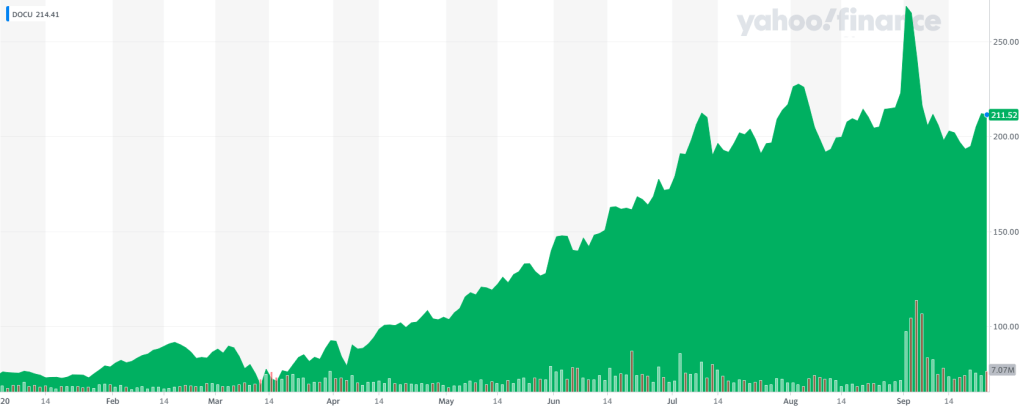
DocuSign (#41)
Sector: Technology / Market Capitalization added $ 16.4 bn (+123%)
DocuSign the leader in eSignature [8], provides capabilities to enable electronic signatures on all Internet-connected devices [9].
DocuSign is the second best performer in the technology industry just after Zoom Video. The video conference platform, connecting people working / studying / socializing from home during the pandemic, increased by 255% its market capitalization.
Since July (but a pick in September 1st) DocuSign performances denote a stabilization. That said the 52-week-change factor is very high at 238.81%.

American Tower (#46)
Sector: Real Estate / Market Capitalization added $ 15.2 bn (+15%)
American Tower, one of the largest global real estate investment trusts, is a leading independent owner, operator and developer of multitenant communications real estate with a portfolio of approximately 181,000 communications sites. American Tower has the infrastructure, processes, and industry understanding to help companies in the IoT market [10].
American Tower is the last performer of the five Real Estate sector companies (three of which fall in the unfinished-products group) that figure in the Financial Times list. American Tower 52-week-change indicator is one digit only (8.96%)

Prologis (#47)
Sector: Real Estate / Market Capitalization added $ 15.1 bn (+27%)
Prologis, is the global leader in logistics real estate with a focus on high-barrier, high growth markets. Prologis offers ‘Connected Facility Tool’[11] to help customers manage buildings remotely hence it has been included in the unfinished-products set.
Prologis is the second performer of the five Real Estate sector companies just after Digital Realty Trust (56%). Prologis 52-week-change indicator is 10.47%.
Keyence (#48)
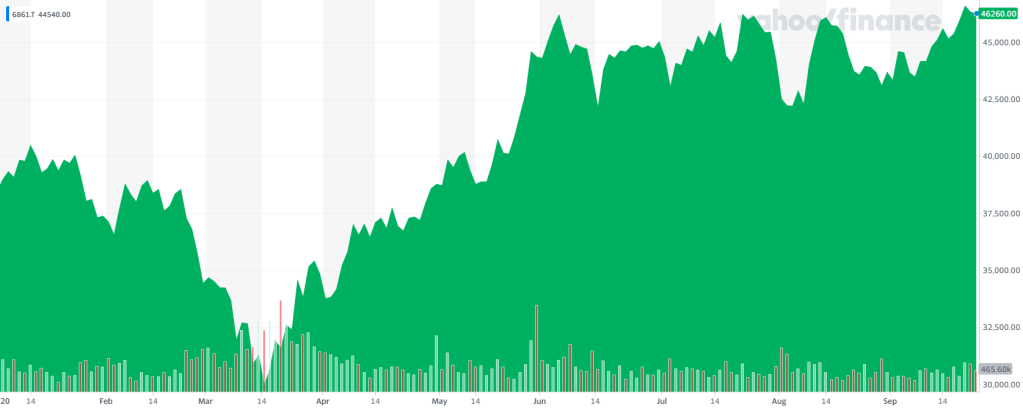
Sector: Technology / Market Capitalization added $ 14.6 bn (+17%)
Keyence, together with its subsidiaries, develops, manufactures, and sells factory automation solutions worldwide. Keyence offering includes products as code readers, laser markers, machine vision systems, measuring systems, microscopes, sensors, and static eliminators which align with the unfinished-products principles [12].
Keyence performances are lower compared to other technology companies. Keyence 52-week-change indicator is 38.56%
Crown Castle International (#63)
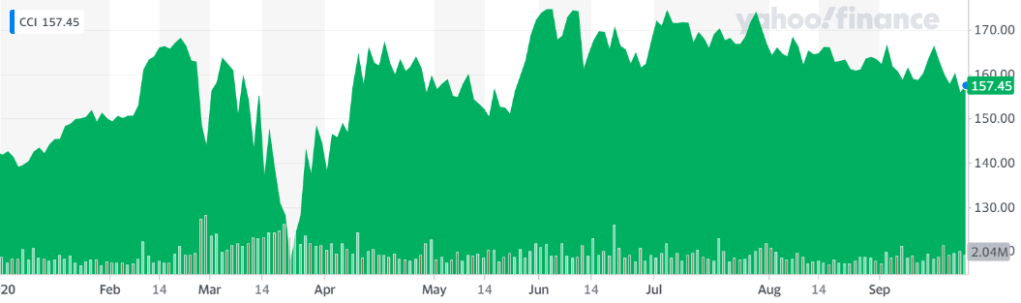
Sector: Real Estate / Market Capitalization added $ 11.5 bn (+19%)
Crown Castle owns, operates and leases more than 40,000 cell towers and approximately 80,000 route miles of fiber supporting small cells and fiber solutions across every major U.S. market. This nationwide portfolio of communications infrastructure connects cities and communities to essential data, technology and wireless service. Crown Castle offering around IoT[13] backs the company being selected as unfinished-products. Crown Castle performance are similar to its competitor Tower America and its 52-week-change index is also in the one digit (9.59%).

Teladoc Health (#100)
Sector: Healthcare / Market Capitalization added $ 8.2 bn (+134%)
Teladoc Health, Inc. provides virtual healthcare services on a business-to-business basis in the United States and internationally. With its Solo™[14] a fully integrated, enterprise virtual care platform, Teladoc embraces the unfinished-products principles.
Teladoc performances are solid and it comes as third within the healthcare sector with a 52-Week Change index of 205.25%.
Unfinished-products have an interesting presence in the list of the companies (top 100) that were prospering the most the pandemics. The combined market capitalization of the eleven companies we selected having a business model based on unfinished-products or providing strategic offering that are enabling unfinished-products sum up to $ 763.3 bn (5% of the entire market capitalization of the entire 100 companies list).
This is an extraordinary figure considering the following factors:
- the added market capitalization change (48%) is one of the highest per sector
- the extraordinary performance of the child poster of unfinished-products Tesla coming 4th in the list
- the IoT’s revenue to be around $ 695 bn [15] is only 1% of the global GDP[16].
The acceleration of the unfinished-products performance demonstrated during the pandemics, support the hypothesis that thanks to their ability to growth by design, unfinished-products are successful in the new normal.
[1] “Prospering in the pandemic: the top 100 companies – The first in an FT series on corporate resilience in a year of human and economic devastation” https://www.ft.com/content/844ed28c-8074-4856-bde0-20f3bf4cd8f0
[2] Global automotive industry revenue between 2017 and 2030 https://www.statista.com/statistics/574151/global-automotive-industry-revenue/
[3]Nasdaq drops over 4% as tech sector sell-off continues https://www.theguardian.com/technology/2020/sep/08/tesla-shares-fell-us-stock-markets
[4] T-Mobile Internet of Things https://www.t-mobile.com/internet-of-things
[5] Semiconductor Wafer Inspection Equipment Market Analysis Highlights the Impact of COVID-19 (2020-2024) | Growing Demand for IoT Devices to Boost the Market Growth | Technavio https://www.businesswire.com/news/home/20200724005307/en/Semiconductor-Wafer-Inspection-Equipment-Market-Analysis-Highlights-the-Impact-of-COVID-19-2020-2024-Growing-Demand-for-IoT-Devices-to-Boost-the-Market-Growth-Technavio
[6] Real-Time Glucose Readings https://www.dexcom.com/g6-cgm-system
[7] PHEIS™ Solution https://www.mindray.com/en/product/PHEIS_Solution.html
[8] DocuSign Aims To Build Upon Its $25 Billion E-Signature Opportunity https://www.forbes.com/sites/robertdefrancesco/2019/05/19/docusign-aims-to-build-upon-its-25-billion-e-signature-opportunity/#c395c4a40825
[9] DocuSign enables electronic signatures on all Internet-connected devices https://www.docusign.com/esignature/electronic-signature-device/
[10] American Tower Internet of Things https://www.americantower.com/us/industries/internet-of-things.html
[11] Prologis Southern Europe launched EEGLE https://www.prologis.com/logistics-industry-news/article/connected-facility-tool-helps-customers-manage-buildings-remotely
[12] Keyence corporate overview https://www.keyence.com/about-us/corporate/
[13] Building the foundation for a connected internet of things https://www.crowncastle.com/industries/internet-of-things
[14] The integrated platform for all virtual care needs https://intouchhealth.com/
[15] Market size and connected devices: Where’s the future of IoT? https://intouchhealth.com/
[16] The World Fact Book https://www.cia.gov/library/publications/the-world-factbook/geos/xx.html

 Unfinished Products
Leave a comment